Every so often, a big online debate breaks out over whether the Bible, and Old Testament figures like Moses and King David, were Jewish (the religion) or Christian. Obviously, the descendants of Abraham were ethnically Jewish. But as far as the religion goes, here’s my take:
It’s all different phases of the same plan. One single plan from God, recorded at different points in history. You don’t have to pick a side, because it’s all the same thing. Let me explain what I mean.
The silence between the Testaments
The final books of the Old Testament, like Malachi and Nehemiah, were written around 400 BC. That closed the era of the ancient prophets. Between those prophets, who communicated God’s words and wishes to Israel, and the birth of the Messiah, God was silent: no new directions, laws, prophecies, or Scriptures were given. And while God was silent, people began acting as self-appointed spokesmen for Him, often saying the opposite of what He wanted.
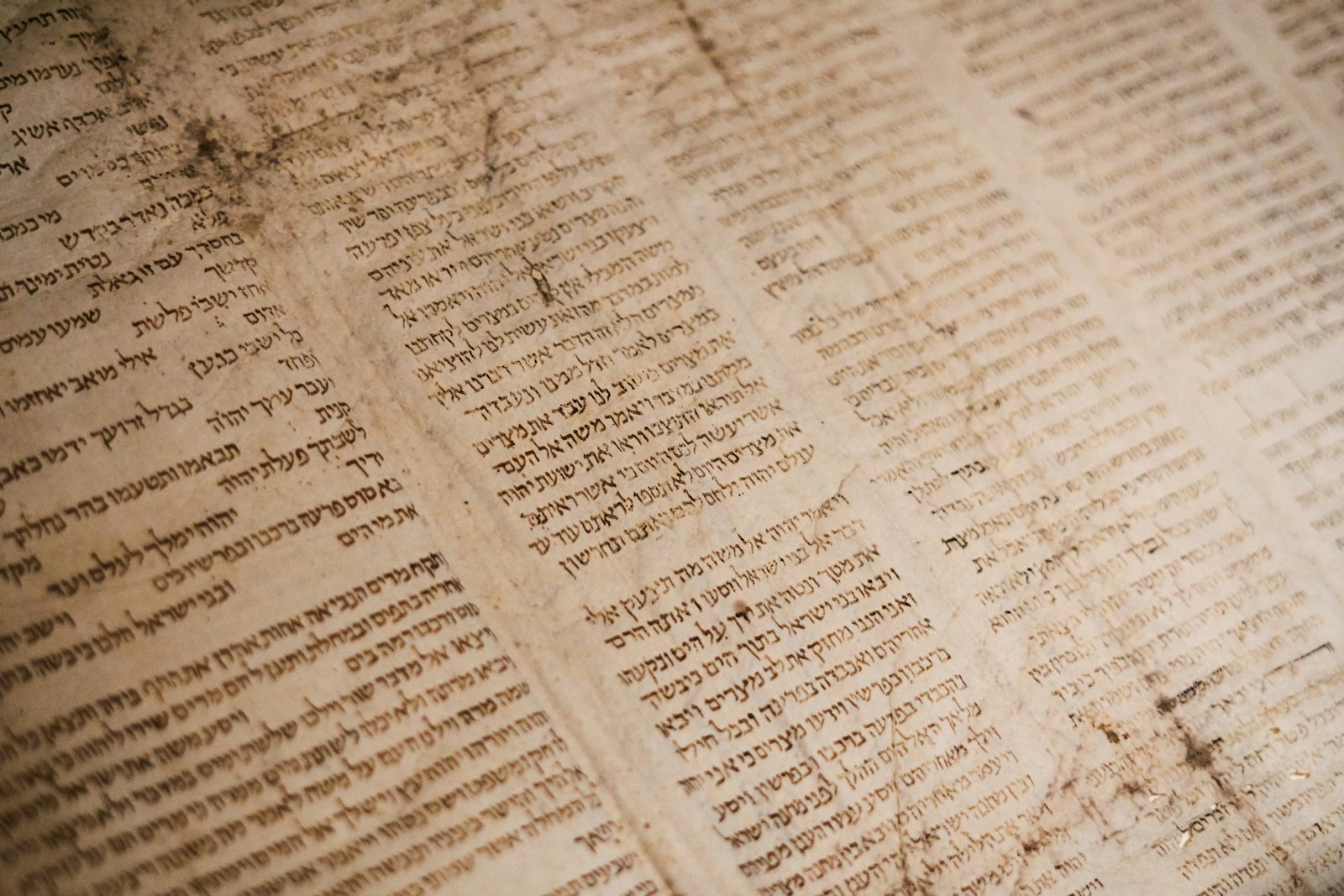
Many of those self-appointed voices were the Pharisees. They taught that God gave Moses both a written Torah (the first five books of the Bible) and an Oral Torah of spoken traditions. In the vacuum of leadership, the Pharisees rose to power, teaching the law in local meeting places called synagogues. Centuries later, the rabbis who followed them wrote those oral traditions down. They were man-made, not divinely inspired, and that collection eventually became the Talmud.
What Jesus honored, and what He confronted
When Yeshua the Messiah came, He always honored, upheld, and taught from the Torah, the Scriptures given by Himself and His Father. But over and over, He contradicted and pushed back against the spoken traditions taught by the Pharisees. For instance, He broke with rabbinic teaching that kept women from being disciples and learning the Scriptures, and He challenged legalistic rituals like strict hand-washing, just to name a few.
Jesus told His followers to listen to the Pharisees when they taught the written Word, but not to copy their actions (Matthew 23:2–3). He believed God’s written law was perfect, but He had no patience for man-made traditions that replaced God’s true message (Mark 7:8–9). Jesus didn’t come to start a new religion. He came to fulfill the one God had already established, usher in its next chapter, push back against the false teaching that had crept into it, and set it back on the right path. (I unpack this more in Why Christians Can’t Abandon the Old Testament.)
The first Christians were Jews
After Jesus fulfilled the law and the prophecies through His death, burial, and resurrection, faithful Jews committed to following Him and His teaching into the next chapter of history. They still identified as Jewish, but considered themselves Jewish followers of “the Way.” In the early years, every Christian was simply a Jew who followed Yeshua. Jewish and Christian weren’t contradictory. It was normal to be both.
The split came when the religious leaders who rejected Jesus resisted the correction He brought, built their religion around the oral traditions that became the Talmud, and rejected the teachings of Christ. Over time, the world came to call that branch “the Jews,” while the Jewish believers who followed the Messiah into the next chapter were pushed to the margins.
Scripture is clear about who God counts as His people in the deepest sense: “A person is not a Jew who is one only outwardly… a person is a Jew who is one inwardly, and circumcision is circumcision of the heart, by the Spirit” (Romans 2:28–29).
So which is it?
I don’t have a problem with the label or the religion of Christianity. I am a Christian, I don’t think God has a problem with it either, and I’m proud to be known as one. But I don’t believe Christ came to start a new religion. I believe true, God-recognized Judaism and Christianity are the same faith. Call it what you want: true Judaism followed Jesus and His teaching into the new era, the door was opened to the Gentiles, and the label “Christian” was eventually put on all of us.
Some would say Christianity is a sect of Judaism that follows Jesus. Others would say Messianic Judaism is a denomination of Christianity. Personally, I believe both are true, even though that isn’t popular with either group.
I also believe that ethnic Jews, even those who don’t believe in Christ, still have covenants with God concerning their land, their nation, and the endurance of their descendants. I explain that in Are Jews Still God’s Chosen People?